Should I Quit My Job and Travel? (What No One Tells You About the Finances)
The Instagram version: quit, pack a bag, find yourself. The real version: here's what it actually costs, what it does to your career, and how to plan it properly.

The idea is appealing in a specific, visceral way.
Quit. Book a flight. Spend six months somewhere that isn’t an office. Come back with perspective and a tan and some idea of what actually matters.
This is not an argument against doing that. For some people, at the right time, with the right preparation, a travel sabbatical is genuinely one of the best decisions they make. But the gap between the fantasy version and the version that actually goes well is mostly financial planning - and most people skip it.
What Long-Term Travel Actually Costs
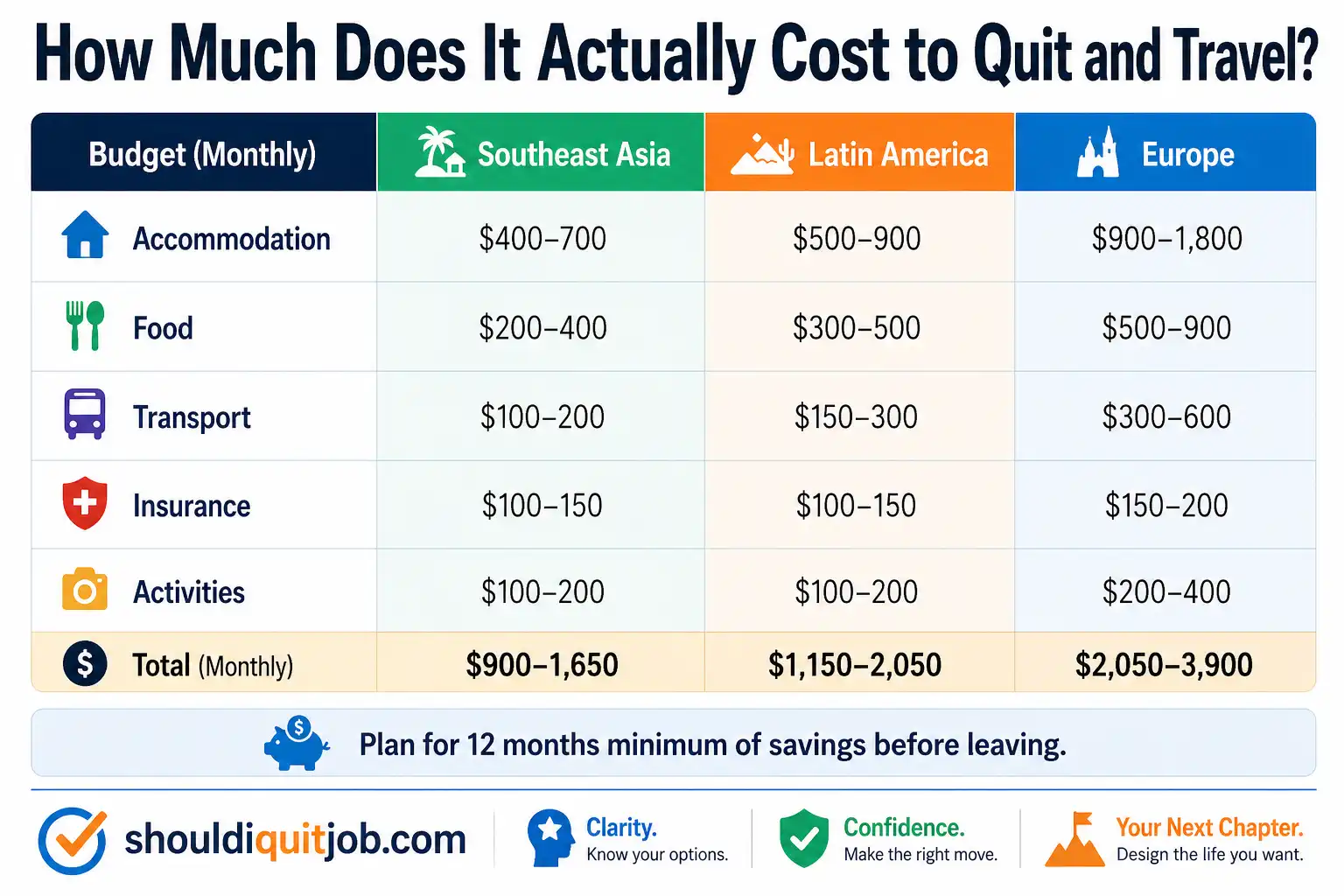
The numbers people use to plan travel sabbaticals are usually the accommodation costs. They find a cheap rental in Chiang Mai or Lisbon, calculate that it’s affordable, and use that as the whole budget.
It isn’t.
Southeast Asia: Most people budget for accommodation. The full cost - accommodation, food, local transport, activities, occasional splurges, the apps and subscriptions that don’t stop - runs £900 to £1,600 per month for most Western travellers, not £500.
Europe: Significantly more expensive. Budget accommodation exists, but long-term travel across Europe - where you’re moving between countries with higher costs - runs £2,000 to £3,500 per month for most people.
Latin America: More affordable than Europe, more variable than Southeast Asia. £1,200 to £2,200 per month is a realistic budget for someone travelling reasonably rather than budget-backpacking.
These figures are per person, for travel rather than settling in one place. If you’re spending a month somewhere without moving, costs drop. If you’re moving every week, they go up.
The Costs People Forget to Include
International health insurance. Your domestic health coverage typically doesn’t travel with you. A comprehensive international health insurance policy for a healthy adult runs £75 to £200 per month depending on coverage and region. This isn’t optional - one hospitalisation abroad without insurance is a financial catastrophe.
Travel insurance. Separate from health insurance in many policies. Covers trip cancellation, lost luggage, emergency evacuation. £30 to £60 per month.
Flights. Not just the initial flight - the movement costs over a six-month trip. Flights between countries, occasional long-distance moves. Depending on how much you’re moving and where, this averages £150 to £400 per month when spread across the trip.
Storage. If you’re keeping your flat or storing belongings at home, those costs continue while you’re away. Even a small storage unit adds £50 to £150 per month.
Re-entry costs. When you come back, there’s usually a period before employment restarts. You need a month or two of runway after the trip, not just during it. This is separate from travel costs but part of the total budget.
The Career Gap Question
The fear about taking a career break is that it will permanently damage your employability. In most cases, this is overstated - but it’s worth understanding the realistic picture.
A gap under six months is barely noticeable in most fields. Hiring managers see it, understand it, and move on. You don’t even need a particularly compelling explanation.
A gap of six to twelve months typically needs a clean narrative. “I took a deliberate sabbatical” is a complete and credible answer. What hiring managers are really checking is whether you seem intentional about it or whether it looks like something you’re trying to hide.
Over twelve months can raise more questions in certain industries and at senior levels. It’s still manageable - but you’ll need to show what you were doing, what you learned, and that you’re engaged and current in your field when you return.
The thing that actually matters isn’t the length of the gap - it’s whether you can speak clearly and positively about why you took it and what you’re looking for now. A confident, forward-looking conversation about a year off beats a defensive, apologetic conversation about three months.
CV and Re-entry: How to Frame It
“I took a career break to travel” is honest. Knowing what to say in interviews matters here. It’s also incomplete. Here’s how to frame it better.
“After several years in [field], I made a deliberate decision to take a sabbatical before my next step. I spent [time] travelling through [places], and used the time to reflect on what I wanted from the next chapter of my career. I’m now looking for [specific type of role] because [specific reason].”
That’s a narrative. It shows intentionality. It ends with a forward-looking statement. It’s not an apology.
If you did anything substantive during the trip - freelance work, a course, volunteering, writing, language learning - include it briefly. Not to fill the gap, but because it’s genuinely relevant.
Remote Work: The Better Middle Path
For many people, the realistic alternative to “quit and travel” is “work and travel” - finding a role that’s remote-friendly and doing the first few months of the sabbatical without quitting.
More employers offer genuine remote flexibility than did before 2020. A remote-first role at a company with no location requirements lets you work from anywhere - which is most of what travel actually involves, once you get past the Instagram version.
This isn’t available to everyone. But if your field supports remote work and you haven’t explored it, it’s worth knowing: you can have a significant portion of the experience without giving up the income.
The Actual Minimum Budget
Let’s build a realistic number for a six-month trip to Southeast Asia - one of the cheaper regions - that’s properly planned.
Monthly costs: £1,200 (conservative, Southeast Asia focus) International health insurance: £120/month Travel insurance: £40/month Flights and transport: £200/month average Subscriptions and digital costs: £60/month
Monthly total: £1,620 Six months: £9,720
Plus: one month’s buffer (£1,620) and re-entry runway of two months (£3,240 at home costs)
Total realistic budget: approximately £14,600
For Europe the same structure runs £20,000 to £30,000. For Latin America, £13,000 to £20,000.
Most people who “failed” at travel sabbaticals - came back early, came back stressed - underestimated this by 40 to 60 percent.
Before You Go: A Preparation List
Twelve weeks before: Calculate the full budget including re-entry. Confirm savings are there or set a target date.
Eight weeks before: Sort international health insurance. Research entry requirements and any vaccinations needed. Give notice with enough time to leave professionally.
Four weeks before: Arrange storage or sublet if needed. Set up a way to manage money abroad (Wise, Revolut). Notify your bank.
Two weeks before: Sort anything outstanding at work. Have the reference conversations. Update LinkedIn.
One week before: Confirm the first month’s accommodation. Have a loose plan for Month 1 - even if the rest is open.
You don’t need to plan the whole trip. You need to plan the first month and have the financial foundation in place. Everything else can be figured out from there.
Ready for your answer?
Get a data-backed verdict in 2 minutes
13 questions. Personalised Leap / Wait / Stay verdict. Financial runway analysis. Basic report free · Full analysis available · No login required.
Analyse My SituationThis content is for informational purposes only and does not constitute professional financial, career, or psychological advice. If you're experiencing symptoms of depression, anxiety, or burnout, please speak with a qualified health professional.